Archives
- 2026-09
- 2026-08
- 2026-07
- 2026-06
- 2026-05
- 2026-04
- 2026-03
- 2026-02
- 2026-01
- 2025-12
- 2025-11
- 2025-10
- 2025-09
- 2025-03
- 2025-02
- 2025-01
- 2024-12
- 2024-11
- 2024-10
- 2024-09
- 2024-08
- 2024-07
- 2024-06
- 2024-05
- 2024-04
- 2024-03
- 2024-02
- 2024-01
- 2023-12
- 2023-11
- 2023-10
- 2023-09
- 2023-08
- 2023-07
- 2023-06
- 2023-05
- 2023-04
- 2023-03
- 2023-02
- 2023-01
- 2022-12
- 2022-11
- 2022-10
- 2022-09
- 2022-08
- 2022-07
- 2022-06
- 2022-05
- 2022-04
- 2022-03
- 2022-02
- 2022-01
-
br Acknowledgements This work was supported by the National
2022-11-08
Acknowledgements This work was supported by the National Key Technology Research and Development Program (2012BAD19B01) and General Financial Grant from the China Postdoctoral Science Foundation (2015M581754). Introduction Cough is one of the most important defensive reflex brought into actio
-
NOXA a BH only protein is best
2022-11-08
NOXA, a BH3-only protein, is best known as a selective inhibitor of MCL-1, which is a highly expressed pro-survival protein in many human malignancies [30]. In addition, NOXA was recently proven to act as a direct activator via directly binding to BAX to induce apoptosis [31]. Given that its levels
-
br Autophagy in the central nervous system The
2022-11-08
Autophagy in the central nervous system The autophagic process appears to be very important for the cells of the central nervous system, as it allows to maintain the functional integrity of the nervous tissue. Indeed macroautophagy is involved in the regulation of homeostasis of the CNS, playing
-
Cancer cells manifest characteristic abnormal growth propert
2022-11-08
Cancer Cathepsin K Activity Fluorometric Assay Kit australia manifest characteristic abnormal growth properties accompanying clonal evolution of cells displaying progressively increasing genomic instability capable of invasion and metastasis to distant organ sites. With the emerging knowledge about
-
Later on Wayner Burton Ingold Barclay and Locke modified the
2022-11-08
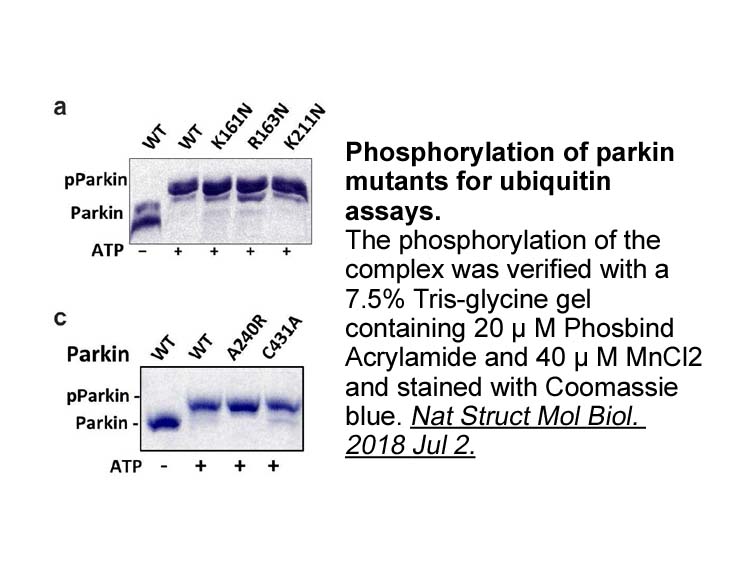
Later on, Wayner, Burton, Ingold, Barclay, and Locke (1987) modified the method by using lipid to examine the ability of an antioxidant dacomitinib protect against lipid peroxidation generated by azo-compound. It was later improved using β-phycoerythrin (β-PE) as a fluorescent probe, and the abilit
-
br Experimental EPR spectra of probes a f were recorded
2022-11-08

Experimental EPR spectra of probes 1a–f were recorded on a Bruker EMX-1572 operating at X-band (9.0–9.9 GHz), at 21 ± 1 °C. The EPR parameters were the same in all experiments: microwave power, 1 mW; modulation amplitude, 5 G; time constant, 10.24 ms; and conversion time, 40.96 ms. Reduced gluta
-
br A and tau in
2022-11-07
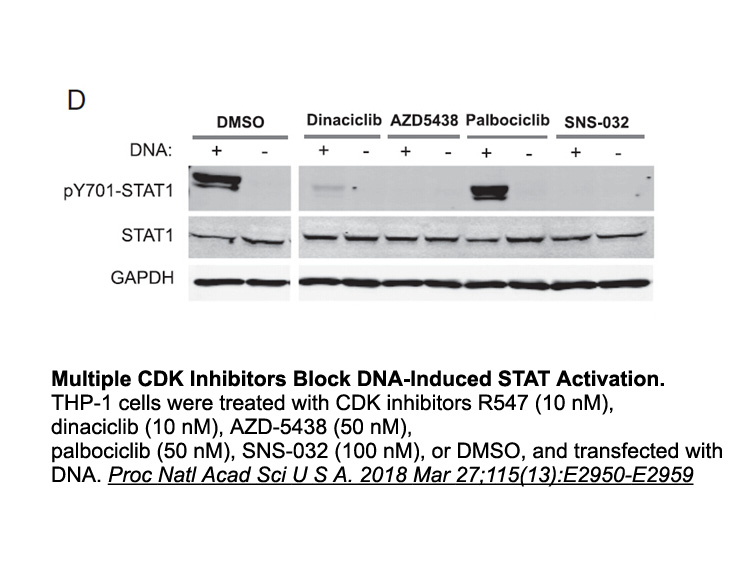
Aβ and tau in Alzheimer's disease The two classical histopathological hallmarks of AD are extracellular insoluble Aβ deposits, known as Aβ plaques, and intracellular accumulations of insoluble microtubule-associated tau protein, known as neurofibrillary tangles [14]. Aβ peptides are produced as a
-
Z VDVAD FMK receptor Some of the earliest LOX inhibitors
2022-11-07
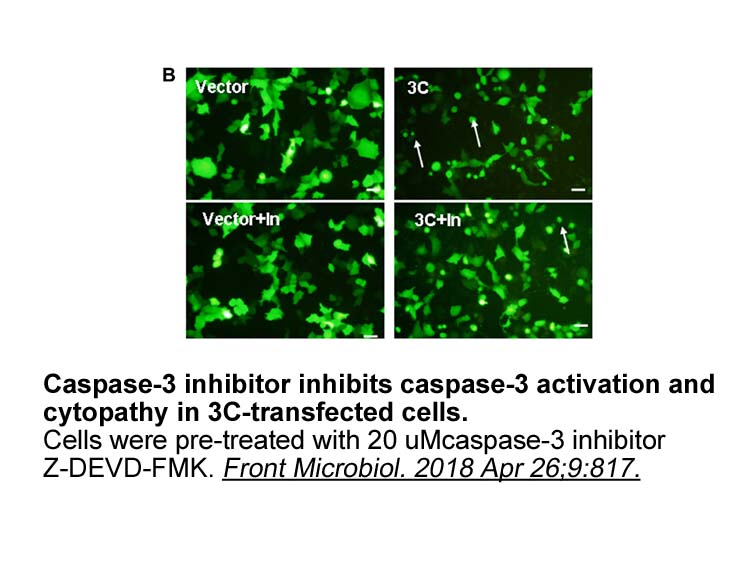
Some of the earliest 12-LOX inhibitors were redox inhibitors, including nordihydroguaiaretic Z VDVAD FMK receptor (NDGA), BW 755C, and baicalein 48, 49, 50. Redox inhibitors block the oxidation of the nonheme iron at the cataylytic site, preventing its conversion from the inactive (Fe2+) to the act
-
For the first series we decided to verify
2022-11-07
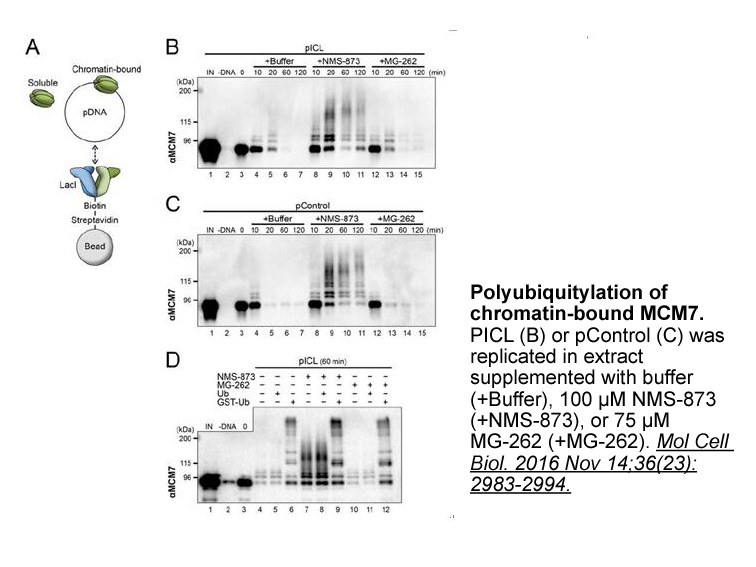
For the first series we decided to verify the effects induced, on the ALR2 inhibitory properties, of an additional steric hindrance on the carbon in α position with respect to the carboxylic group, by introducing a methyl group (R2=Me). Therefore, we synthesized a series of new α-alanine derivatives
-
Our analysis demonstrated that ADA
2022-11-07
Our analysis demonstrated that ADA is a transpicuous and rapid test with high sensitivity and specificity for diagnosis of TBM decidedly. The summary sensitivity and specificity were 0.89 and 0.91 respectively, indicating a sufficient level for overall diagnostic accuracy. The modality of SROC curve
-
Sperm total motility and hyperactivated
2022-11-07
Sperm total motility and hyperactivated motility are mediated by PLD-dependent thymidylate synthase polymerization [20]. Reduction of PIP2 synthesis inhibited actin polymerization and motility, and increasing PIP2 synthesis enhanced these activities. Furthermore, sperm demonstrating low motility co
-
Our published data showed that in
2022-11-07
Our published data showed that, in mouse heart, the protein level of WDR1 was highest during the embryonic stage, but became progressively decreased to a constant level from birth to adulthood (Yuan et al., 2014), indicating an important role of WDR1 in embryonic heart development. However, function
-
Bioactive peptides contain amino acids with possible bioacti
2022-11-07
Bioactive peptides contain 2–20 amino acids with possible bioactivities including antihypertensive, antioxidant, antimicrobial, anticancer, and opioid activity [9], [10], [11]. There has been a great interest in antihypertensive peptides for their efficiency in lowering blood pressure. The antihyper
-
br Dihydrotestosterone in adult fish and frogs br
2022-11-07
Dihydrotestosterone in adult fish and frogs New perspectives and next directions Similar to other androgens, DHT can modulate reproductive endpoints in both fish and amphibians. However, predicting the effects of DHT can be challenging, as reproductive homeostasis is dependent upon the balance
-
br Introduction The principal pathways of adrenal and gonada
2022-11-07
Introduction The principal pathways of adrenal and gonadal steroidogenesis have been known for over 50 years (reviewed by Miller and Auchus, 2011). Cholesterol is first converted to pregnenolone via three reactions, 20-hydroxylation, 22-hydroxylation and scission of the 20,22 carbon–carbon bond,
8604 records 418/574 page Previous Next First page 上5页 416417418419420 下5页 Last page